Construction Accounting Methods Explained: Cash, Accrual, and Percentage-of-Completion
1/30/2026
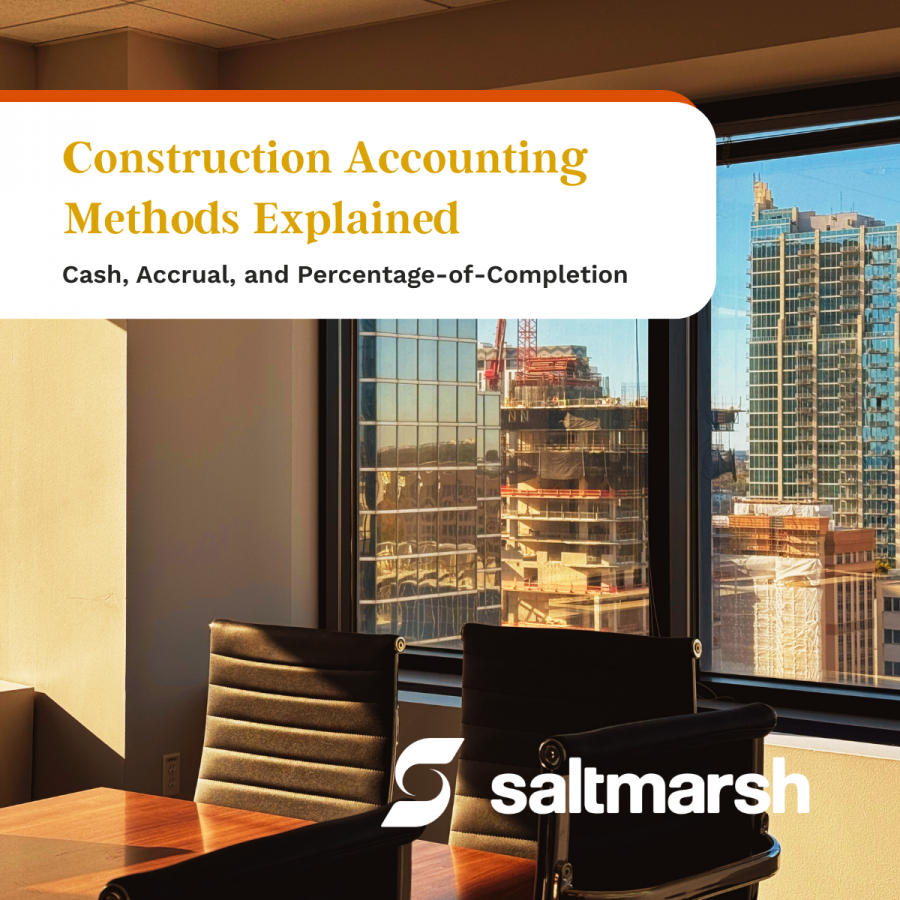
The financial health of your construction business depends on more than just winning bids and completing projects on time. How you track and report your numbers can determine whether you have the working capital to grow, the financial statements to secure bonding, and the tax strategy to keep more of what you earn.
For construction contractors, selecting the right accounting method isn't just a compliance checkbox. It's a strategic decision that influences everything from tax liability to how banks and sureties evaluate your financial strength.
What Makes Construction Accounting Different
Construction companies face unique financial challenges that set them apart from most other industries. Projects often span multiple months or years. Payments arrive in stages rather than at completion. Material costs fluctuate. Subcontractor invoices pile up before the first draw comes through.
Traditional accounting approaches weren't designed for this level of complexity. A retail business knows its revenue when a customer walks out with a product. A construction company working on a $2 million project over 18 months needs a framework that can accurately capture financial performance as the work unfolds.
That's where construction accounting methods come in. These specialized approaches help contractors match income with expenses, manage cash flow visibility, and comply with IRS requirements based on company size and contract characteristics.
Getting this right matters. Companies that choose the wrong method risk distorted financial statements, unexpected tax bills, and strained relationships with lenders or bonding agents who can't make sense of erratic income patterns.
The Four Core Construction Accounting Methods
Most construction firms operate using one of four primary accounting methods. Each has distinct advantages, limitations, and ideal applications depending on your business structure and project types.
Cash Basis Accounting
Cash basis accounting is the most straightforward approach. You record revenue when you receive payment and recognize expenses when you pay them. If a client sends you a $50,000 check in December, that's December income, even if the work was completed in October.
This method works well for smaller contractors with short-duration projects and straightforward cash flow. It requires minimal bookkeeping sophistication and gives you a clear view of how much money is actually in your account at any given time.
The simplicity comes with tradeoffs. Cash basis accounting doesn't reflect the true financial picture of projects in progress. You might show strong profits one month when several clients pay invoices, then appear to be losing money the next month when material costs come due but no payments arrive.
The IRS also limits who can use cash basis accounting. Contractors with average annual gross receipts exceeding certain thresholds must use a more complex method. For most growing construction businesses, cash basis becomes impractical as project timelines extend and contract values increase.
Accrual Basis Accounting
Accrual accounting recognizes revenue when it's earned and expenses when they're incurred, regardless of when money changes hands. Under this method, if you complete $75,000 worth of work in March, you record that revenue in March, even if the invoice won't be paid until May.
This approach provides a more accurate picture of profitability by matching revenue with the costs required to generate it. Lenders and bonding companies typically prefer accrual-based financial statements because they better reflect operational performance rather than just cash timing.
The challenge with accrual accounting in construction is that it can show healthy profits while your bank account remains tight. You might be "profitable" on paper while waiting 60 or 90 days for payment. This disconnect makes cash flow forecasting essential.
For construction companies, accrual accounting typically takes one of two forms: the completed contract method or the percentage-of-completion method. These approaches address how and when revenue is recognized on long-term contracts.
Completed Contract Method (CCM)
The completed contract method defers all revenue and expense recognition until a project reaches substantial completion. Nothing hits your income statement until the job is done, final billings are sent, and the contract is closed out.
This method offers a significant tax advantage: income deferral. If you complete a profitable project in January rather than December, you push that taxable income into the next tax year. For contractors managing tax brackets or wanting to smooth income recognition, this creates valuable planning opportunities.
CCM is generally available to smaller contractors and for projects that will be completed within two years. It's particularly useful when you have a few large projects that dominate your annual revenue. By controlling when contracts close, you gain flexibility in managing taxable income.
The downside is that CCM can create wildly inconsistent financial statements. You might show minimal revenue for three quarters, then massive income in Q4 when multiple projects finish. This volatility makes it harder for stakeholders to evaluate your business performance and can complicate decisions about bonding capacity or credit lines.
Many contractors use CCM exclusively for tax purposes while maintaining internal books on a different method that provides better operational visibility.
Percentage-of-Completion Method (PCM)
The percentage-of-completion method recognizes revenue and expenses proportionally as work progresses. If you're 40% complete on a $1 million project, you recognize $400,000 in revenue along with the corresponding costs incurred to date.
This method aligns financial reporting with actual field progress. It gives you, and your stakeholders, an accurate, real-time view of job profitability. Rather than waiting until a project ends to see whether you made money, you can track margin erosion or improvement throughout the life of the contract.
PCM is required by the IRS for contractors with average annual gross receipts over $30 million on long-term contracts. It also aligns with Generally Accepted Accounting Principles (GAAP), making it the standard for companies that need audited financial statements or work with sophisticated financial partners.
The method requires more rigorous project tracking. You need reliable systems to measure progress, capture costs, and calculate earned revenue. Errors in estimating percent complete can lead to misstated profits and, eventually, unpleasant surprises when projects close.
Despite the complexity, PCM provides the financial transparency that growing construction companies need to make informed decisions and maintain credibility with banks and sureties.
Choosing the Right Method for Your Business
The appropriate accounting method depends on several factors: your annual revenue, typical project duration, contract structure, and growth objectives.
Smaller contractors working on short-term projects often benefit from the simplicity of cash basis accounting, at least initially. As projects grow in scope and duration, transitioning to accrual-based methods becomes necessary for accurate performance measurement.
The decision between completed contract and percentage-of-completion methods involves balancing tax strategy with financial transparency. CCM offers tax deferral benefits but can obscure true performance. PCM accelerates tax liability but provides the consistent, credible financial reporting that lenders and bonding companies value.
Many mid-sized contractors adopt a hybrid strategy: using PCM for internal financial management and external reporting, while applying CCM for tax filing on qualifying contracts. This approach delivers operational insight without sacrificing available tax benefits.
The IRS places specific restrictions on which methods are available based on gross receipts and contract characteristics. Understanding these rules is essential. Using an impermissible method can result in penalties, interest charges, and forced retroactive adjustments that create significant financial strain.
Tax Planning and Financial Reporting Considerations
Your accounting method directly impacts both your current tax bill and your ability to access capital. These aren't separate concerns, they're interconnected parts of your financial strategy.
From a tax perspective, the timing of income recognition determines when you owe taxes. Methods that defer income can reduce current-year liability, but they may also limit your ability to demonstrate consistent earnings to lenders. Conversely, methods that accelerate income recognition might increase your immediate tax burden while strengthening your loan applications and bonding submissions.
Banks evaluate construction companies based on their ability to generate consistent profits and maintain adequate working capital. Erratic income patterns, even if caused solely by accounting method choices, raise red flags. Bonding companies assess financial strength and stability when determining your bonding capacity. The accounting method that makes your business look strongest on paper can directly affect the size and type of projects you can pursue.
Strategic tax planning means understanding these dynamics and making informed tradeoffs. Consider these planning opportunities:
- Year-end income management: If several large projects will complete near year-end, accelerate equipment purchases or year-end bonuses to offset the income spike
- Capital access preparation: When pursuing a significant credit line, prioritize reporting methods that demonstrate stable profitability over aggressive tax deferral
- Tax incentive coordination: Align construction-specific benefits like Section 179 expensing and bonus depreciation with your accounting method for maximum advantage
- Cost allocation strategy: Structure the treatment of direct versus indirect costs to create additional planning flexibility
Implementing and Maintaining Your Accounting Method
Selecting an accounting method is just the first step. Proper implementation requires strong internal controls, appropriate software systems, and ongoing compliance oversight.
Project-level tracking becomes critical under accrual methods, particularly with percentage-of-completion. You need systems that capture costs by job, track billing progress, and calculate earned revenue accurately. Many construction ERP systems offer built-in PCM calculations, but they still require clean data input and regular reconciliation.
Documentation is essential. The IRS expects consistent application of your chosen method from year to year. Any changes require formal approval through Form 3115. Maintaining clear records of your methodology, including how you measure progress and allocate costs, protects you during audits and ensures continuity as your team grows.
As your business evolves, whether through growth, new market entry, or changes in project mix, your accounting method should be reevaluated. A method that worked well at $5 million in revenue might become a constraint at $25 million. Regular review with experienced construction accountants helps ensure your approach continues to serve your strategic needs.
Making the Right Choice for Long-Term Success
The construction accounting method you choose shapes how you understand your business, how others perceive your financial strength, and how much you pay in taxes each year. There's no universally "best" method, only the right method for your specific circumstances and objectives.
Working with CPAs who specialize in construction accounting ensures you're not just compliant, but strategically positioned. At Saltmarsh, our commercial construction practice has helped contractors across Florida implement accounting methods that support growth, optimize tax outcomes, and strengthen relationships with lenders and sureties.
If you're uncertain whether your current accounting approach is serving your business well, or if you're experiencing growing pains that suggest it's time for a change, we can help. Our team brings deep construction industry experience and can provide the guidance you need to make informed decisions about your financial infrastructure.
Contact Saltmarsh today to discuss your construction accounting needs and discover how the right method can support your long-term success.
Related Posts
- Construction Cost Accounting for Commercial Contractors
- Fueling Contractor Growth with Accounting Insights
- What the Best Accounting Outsourcing Companies Provide that Bookkeepers Don't
- How an Outsourced Accounting Department Transforms Month-End Close
- Margins & Mindset: A Contractor's Guide to Smarter Financial Growth
- Meals & Entertainment Expenses
- How Accounts Payable Outsourcing Improves Accuracy, Speed, and Internal Controls
- The Hidden Benefits of Accounts Receivable Outsourcing for Businesses
- IRS Releases FAQ on Paper Check Phase-Out
- Construction Accounting Methods Explained: Cash, Accrual, and Percentage-of-Completion
- A Practical Guide to Construction Job Costing for Contractors
- WIP Construction Accounting: How to Read and Use a Work-in-Progress Report
- Stop the Profit Leaks: 6 Gut checks for Contractors
- Saltmarsh Leader Suzanne Bach Joins ABC Florida Gulf Coast Board
- What to Know Before Year-End
- Job Schedules 101: A Smarter Way to Strengthen Construction Finances
- Tax Law Impacts: One Big Beautiful Bill Act
- A Quick Guide to Percent of Completion for Long-Term Construction Contracts
- Four Metrics Your Construction Company Should Start Tracking Today
- WEBINAR: Horror Stories in Employee Safety/Risk Management
- White Paper: Manufacturing Outlook, Leveraging Technology Today
- Webinar Materials: The Cost of Attracting & Retaining Talent in Today's Market
- White Paper: Manufacturing Outlook, Lean Thinking to Reduce Costs
- Biden's Infrastructure Plan: What Is Construction's Opportunity?
- Construction Tax Team Featured in Florida Transportation Builders Association's Magazine
- View All Articles